BLindinlights February 07, 2024 #MIT6.S081 #OS #操作系统
最近在学习 MIT 6.S081 课程,看完了 lecture 1,挑战一下实验并在这里记录一下
环境搭建
主要是 riscv gcc 编译工具链和 qemu 的一系列工具。具体参见 Lab tools.
Arch linux
paru -S riscv64-linux-gnu-binutils riscv64-linux-gnu-gcc riscv64-linux-gnu-gdb qemu-arch-extra
实验以及 xv6 kernel 的代码需要用 git clone 到本地
git clone git://g.csail.mit.edu/xv6-labs-2021
git checkout util # 切换到util分支,也就是第一个实验的分支
make qemu #build and run xv6
我自己在编译的时候遇到了一点问题,gcc 提示 -Werror=infinite-recursion,删除 Makefile 中CFLAGS的-Werror选项后解决问题
怀疑是编译器版本问题,但无限递归是一个挺常见的 Warning 选项. 不知道其他人是怎么编译的:)
Sleep
非常简单的一个程序,直接系统调用就行
#include "kernel/types.h"
#include "user/user.h"
int main(int argc, char *argv[])
{
const char *arg_msg = "missing sleep time!\n";
if (argc < 2)
{
write(1, arg_msg, strlen(arg_msg)); }
int dur = atoi(argv[1]);
exit(sleep(dur));
}
PingPong
需要两个管道,每个管道一端读一端写,注意顺序:
父进程写,子进程读,子进程输出,子进程写,父进程读,父进程输出。
#include "kernel/types.h"
#include "user/user.h"

int main()
{
    int p1[2];
    int p2[2];
    pipe(p1);
    pipe(p2);
    char buffer[1] = {'x'};
    int ret = fork();
    if (ret == 0)
    {
        int pid = getpid();
        close(p1[1]);
        close(p2[0]);
        read(p1[0], buffer, 1);
        printf("%d: received ping\n", pid);
        write(p2[1], buffer, 1);
        exit(0);
    }
    else
    {
        int pid = getpid();
        close(p1[0]);
        close(p2[1]);
        write(p1[1], buffer, 1);
        read(p2[0], buffer, 1);
        printf("%d: received pong\n", pid);

        exit(0);
    }
}
Primes
这个有点复杂,首先先了解一下多进程求素数的原理
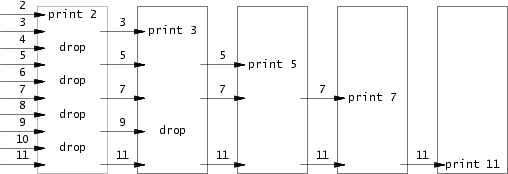
每个进程有一个读管道(readp)读取上个进程(左邻居)传送过来的数字,一个写管道(writep)将数字发送给下一个进程(右邻居)。 具体参见Bell Labs and CSP Threads
当前进程读取管道,第一个数(cur)即为素数,一直从管道读取并将不是该数(cur)倍数的数字写进管道,传给下一个进程
实现的思路是,最新的进程 fork()的返回值永远是 0,只要处理好初始进程,后续进程的逻辑直接按照上文实现,当没有数可读时,直接退出。
注意要关闭所有的管道写端,这样子进程的read就不会一直等待,我在刚开始的时候以为只用在父进程关闭写就可以,但忘记了这个写端也被子进程持有,结过程序一直阻塞进行不下去 (怀念 raii,第一次体会到不及时释放资源带来的问题,感谢 cpp)
#include "kernel/types.h"
#include "user/user.h"
static int lock = 0;
int main()
{
int p0[2] = {0};
pipe(p0);
for (int i = 2; i <= 35; i++)
{
write(p0[1], &i, sizeof(int));
}
close(p0[1]);
int readp = p0[0];
int writep = 0;
int cur = 0;
while (1)
{
int pid = getpid();
int n = read(readp, &cur, sizeof(int));
if (n == 0)
{
close(readp);
exit(0);
}
int np[2] = {0};
pipe(np);
writep = np[1];
int ret = fork(); if (ret == 0)
{
close(np[1]); close(readp);
readp = np[0];
continue; }
close(np[0]);
printf("prime %d\n", cur);
int num = 0;
while (read(readp, &num, sizeof(int)))
{
if (num % cur != 0)
{
write(writep, &num, sizeof(int));
}
}
close(writep); close(readp);
int child;
wait(child);
exit(0);
}
}
find
参考 user/ls.c 中的代码递归查找,不要递归 . 和 .. 目录
另外观察代码可知,xv6 的目录和应该就是一个文件,想获取目录名直接读取该文件的 16 个字节就可以获取这个目录的信息 struct dirent
#include "kernel/types.h"
#include "user/user.h"
#include "kernel/fs.h"
#include "kernel/stat.h"

int find(char *patt, char *path)
{
    char buf[512], *p;
    int fd;
    struct dirent de;
    struct stat st;

    if ((fd = open(path, 0)) < 0)
    {
        fprintf(2, "find: cannot open %s\n", path);
        return;
    }

    if (fstat(fd, &st) < 0)
    {
        fprintf(2, "find: cannot stat %s\n", path);
        close(fd);
        return;
    }
    switch (st.type)
    {
    case T_FILE:
        p = path + strlen(path);
        for (; p >= path && *p != '/'; p--)
            ;
        p++;
        int ret = strcmp(p, patt);
        if (!ret)
        {
            printf("%s\n", path);
        }
        break;
    case T_DIR:
        if (strlen(path) + 1 + DIRSIZ + 1 > sizeof buf)
        {
            printf("find: path too long\n");
            break;
        }
        strcpy(buf, path);
        p = buf + strlen(buf);
        *p++ = '/';
        while (read(fd, &de, sizeof(de)) == sizeof(de))
        {
            if (de.inum == 0)
                continue;
            if (!(strcmp(".", de.name)) || (!strcmp("..", de.name)))
            {
                continue;
            }
            memmove(p, de.name, DIRSIZ);
            p[DIRSIZ] = 0;
            if (stat(buf, &st) < 0)
            {
                printf("find: cannot stat %s\n", buf);
                continue;
            }
            find(patt, buf);
        }
        break;
    }
    close(fd);
}
int main(int argc, char *argv[])
{
    if (argc < 3)
    {
        printf("Missing parament!");
    }
    find(argv[2], argv[1]);
    exit(0);
}
xargs
待续